
AC Sizing: Why It Matters in Louisiana Homes
AC Sizing: Why It Matters in Louisiana Homes
If your air conditioner cools the house but everything still feels clammy, its size could be part of the problem. In Louisiana, comfort depends on removing both heat and moisture. A system that is too large can struggle with humidity, while one that is too small may fall behind during hot afternoons. Choosing the right size starts with understanding your home—not simply matching your neighbor’s equipment or buying the biggest unit your budget allows.
What Does AC Size Mean?
AC size refers to cooling capacity, not the cabinet’s physical dimensions. Capacity is commonly expressed in British thermal units per hour, or BTU/h, and in tons. One ton of cooling equals 12,000 BTU/h.
That number describes how much heat equipment can remove under specified conditions. It does not tell you whether a particular system fits your home.
Capacity and Efficiency Are Different
Efficiency ratings describe how efficiently equipment provides cooling under standardized conditions. Capacity describes how much cooling it can deliver. A high-efficiency air conditioner can still perform poorly if it is oversized, undersized, or connected to unsuitable ductwork.
When comparing equipment, consider sizing, efficiency, humidity control, and installation quality together.
Why Louisiana’s Humidity Changes the Conversation
Homes in Denham Springs, Baton Rouge, and surrounding communities face long cooling seasons and persistent outdoor humidity. Your AC has two related jobs:
- Remove heat to lower indoor temperature.
- Remove moisture as water condenses on the cold indoor coil and drains away.
These jobs are known as sensible cooling and latent cooling. A proper sizing process accounts for both.
On a humid day with moderate temperatures, the thermostat may call for less cooling even though the house still needs moisture removal. Equipment selection and controls matter because reaching the temperature setting does not automatically mean indoor humidity is comfortable.
Air leaks, bathroom ventilation, and duct leakage also affect moisture levels. If humidity remains high, an indoor air quality evaluation can help identify whether the home needs air sealing, equipment adjustments, or dedicated dehumidification.
What Happens When an AC Is the Wrong Size?
An Oversized AC Can Cool Too Quickly
A larger system is not automatically safer for Louisiana summers. An oversized single-stage unit may lower the temperature quickly, then shut off before it has run long enough to remove adequate moisture.
Possible symptoms include:
- Short, frequent cooling cycles.
- Cool rooms that still feel damp or sticky.
- Noticeable temperature swings.
- Unnecessary starting and stopping that adds equipment wear.
Variable-capacity systems can adjust output, but they still need proper sizing. Their operating range must suit the home’s needs.
An Undersized AC May Struggle to Keep Up
A system with insufficient capacity may run for extended periods without reaching the thermostat setting during hot weather. Upstairs rooms or rooms with strong afternoon sun may be especially uncomfortable.
However, long cycles alone do not prove an AC is undersized. Properly sized equipment can run for long stretches near local design temperatures. Dirty coils, low airflow, refrigerant problems, and leaking ducts can also reduce cooling performance.
How Professionals Determine the Right AC Size
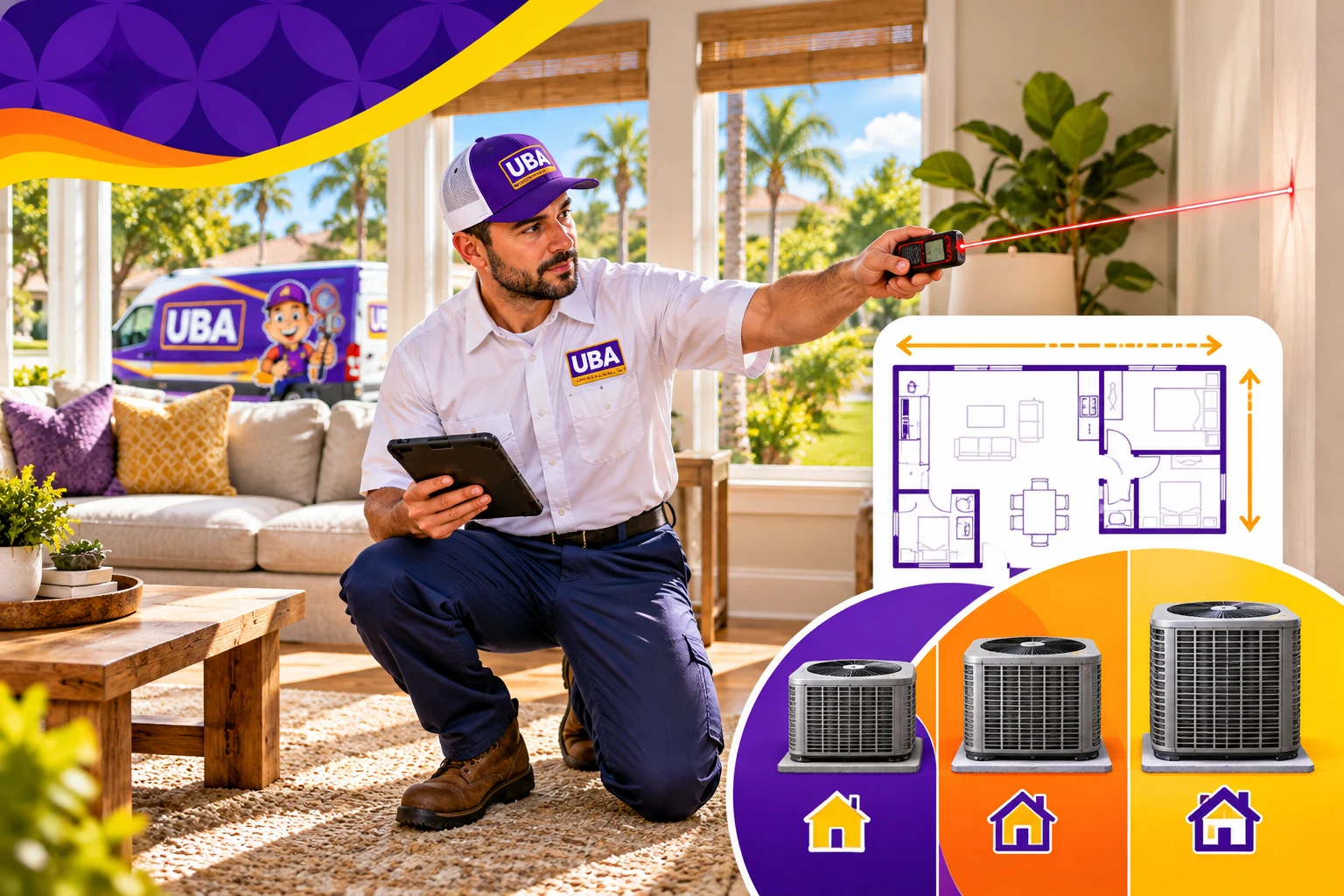
The starting point should be a residential load calculation, commonly performed using ACCA Manual J methodology. This estimates the home’s heating and cooling needs using building details and local design conditions.
What Goes Into a Load Calculation?
Square footage matters, but it is only one input. A thorough assessment considers:
- Ceiling heights and conditioned floor area.
- Insulation levels in walls, ceilings, and floors.
- Window size, type, orientation, and shading.
- Air leakage and ventilation needs.
- Duct location, insulation, and leakage.
- Typical occupancy and internal heat sources.
- Local outdoor design temperatures and indoor targets.
Two homes with identical floor plans can require different capacities if one has shaded windows and improved insulation while the other has substantial air leakage and sun exposure.
Tip: Before requesting an AC estimate, list any insulation upgrades, window replacements, additions, or rooms that stay uncomfortable. Those details help your contractor evaluate the home as it exists today.
Equipment Selection Comes Next
After calculating the load, the contractor should select equipment whose actual performance fits those requirements. Manual S provides a framework for this step, including evaluating sensible and latent capacity at relevant operating conditions.
The nominal tonnage on a label is not the whole story. Indoor and outdoor equipment matching, airflow, and manufacturer performance data all matter. Ask for this explanation when planning an AC installation or replacement.
Why Ductwork and Home Improvements Matter
Even correctly selected equipment cannot deliver comfort through a distribution system that restricts airflow or loses conditioned air into an attic. Duct size, return-air pathways, and leakage should be checked before increasing cooling capacity.
A larger unit connected to inadequate ducts may create more noise and airflow problems rather than solve hot rooms. A ductwork assessment can help determine whether distribution issues are driving the complaints.
Home improvements can also change sizing needs. Air sealing, better attic insulation, and upgraded windows may reduce the cooling load. Conversely, an addition or newly conditioned space may increase it. Replacing an old system with the same tonnage without reviewing these changes can carry an old sizing mistake forward.
What to Ask Before Buying a New AC
A clear proposal should explain more than brand and tonnage. Ask your contractor:
- Will you perform a load calculation for this home?
- How will the equipment handle humidity?
- Can the existing ducts support the required airflow?
- Will you check airflow and system operation after installation?
- What work is included in the quoted price?
If your current system recently stopped keeping up, arrange a performance check first. Routine AC maintenance may uncover a dirty coil or airflow issue that resembles incorrect sizing.
Frequently Asked Questions
What Size AC Do I Need for My Louisiana Home?
There is no reliable answer based on square footage alone. A load calculation using your home’s construction, windows, insulation, air leakage, and local climate is the best starting point.
Will a Bigger AC Lower My Electric Bill?
Not necessarily. Oversizing can cause frequent cycling and poor humidity control. Operating costs depend on equipment efficiency, installation, duct performance, thermostat settings, and the home’s cooling load—not simply tonnage.
Should I Replace My AC With the Same Size?
Only if an evaluation supports that capacity. Your existing system may have been sized incorrectly, and renovations or efficiency improvements may have changed your needs since it was installed.
Get Help Choosing the Right AC
UBA Heating & Cooling is locally owned and family-owned, serving Denham Springs and nearby Louisiana communities since 2013. We offer free estimates on new systems, upfront pricing before work starts, and financing options. Call (225) 567-8711 or book online to discuss the right cooling system for your home.